
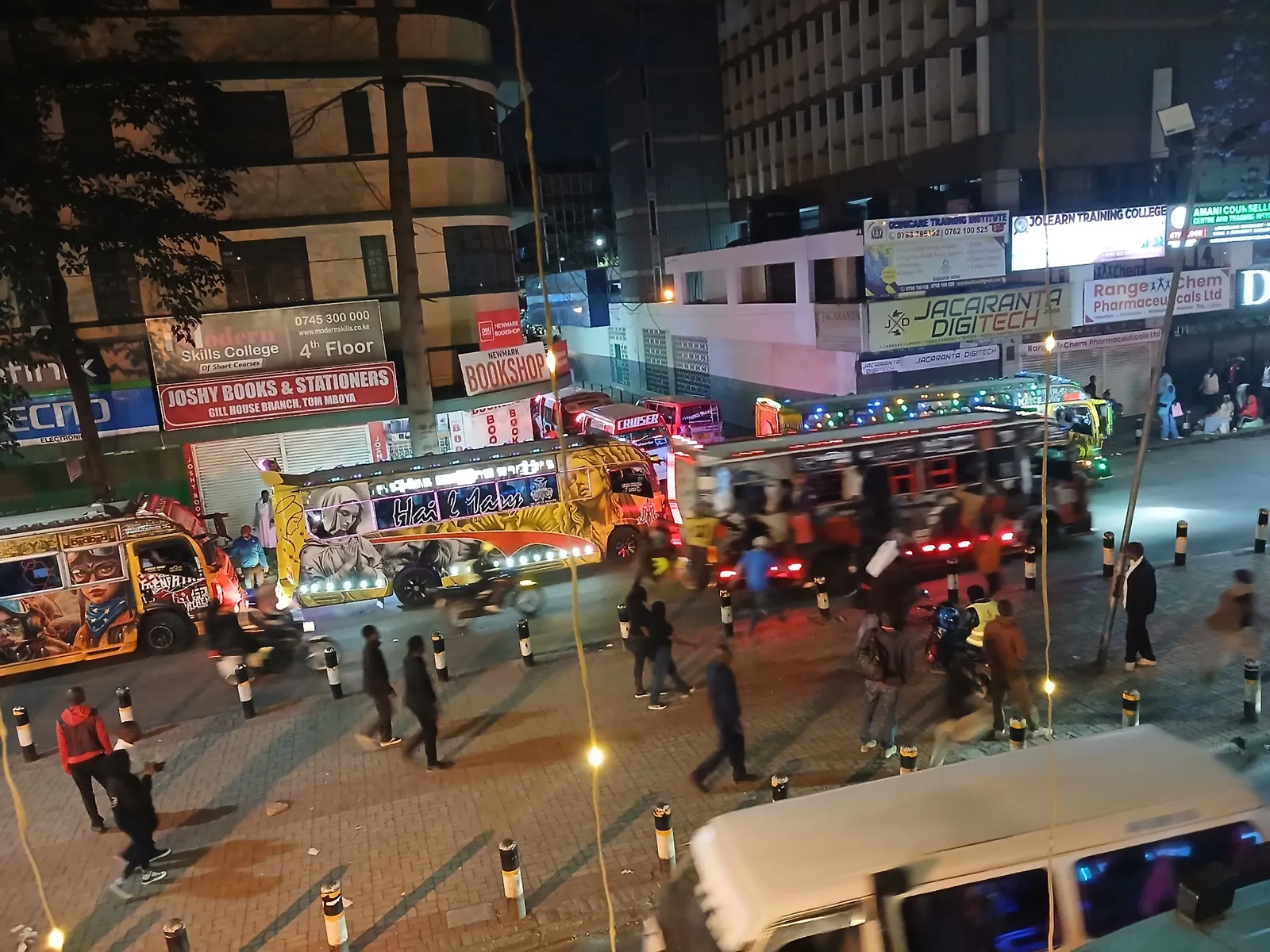
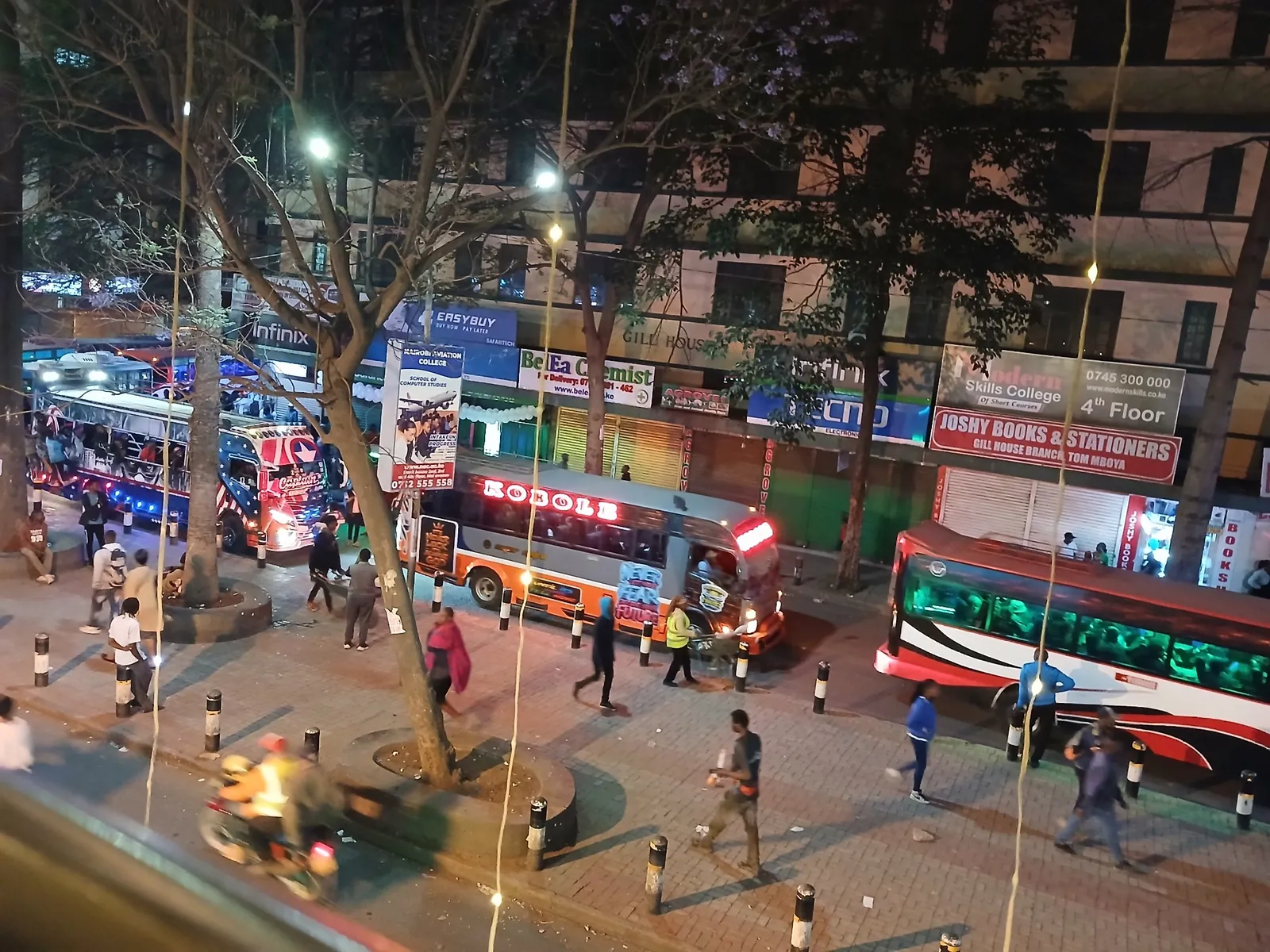
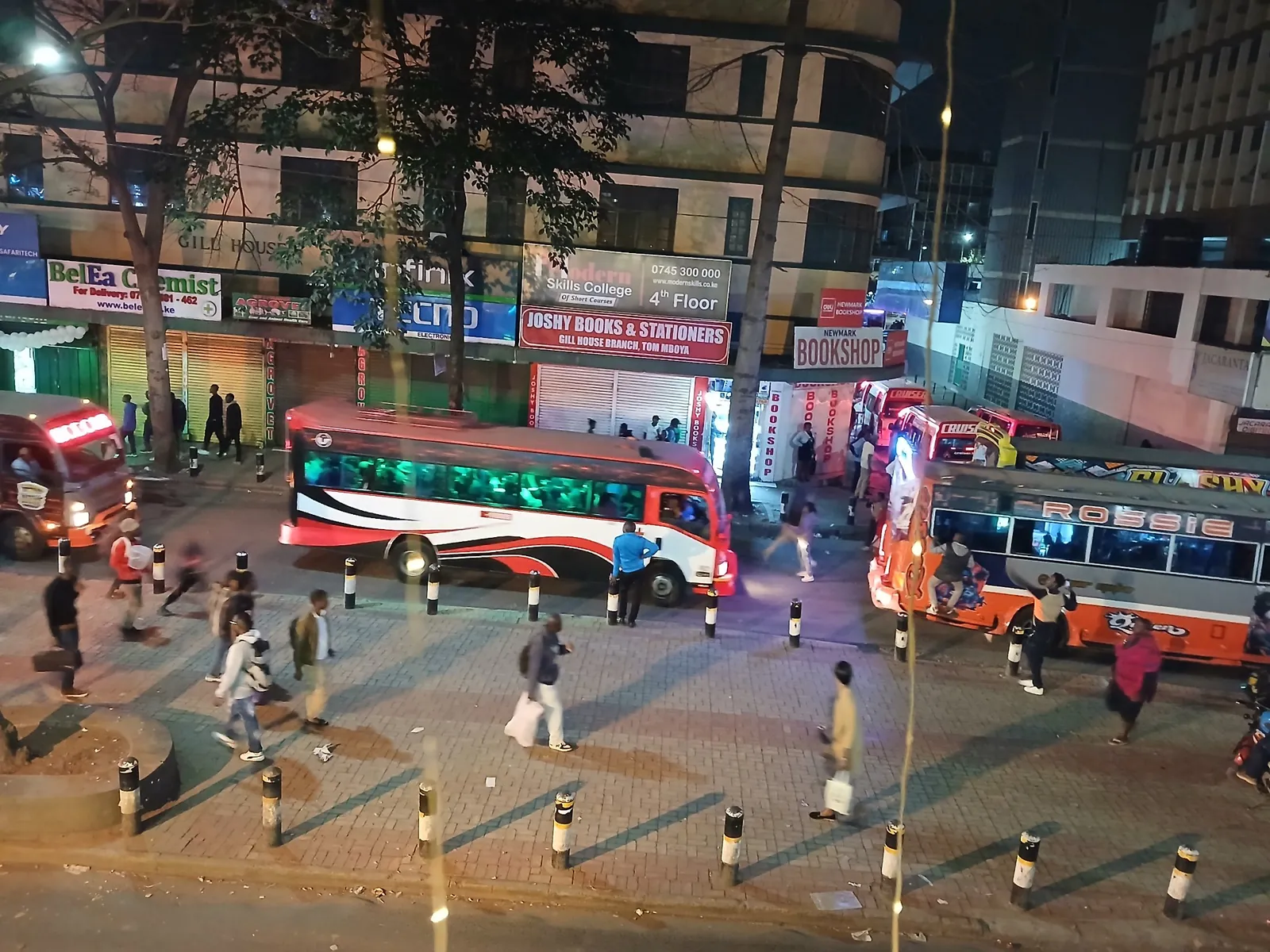
Most of Nairobi’s offices are dark by 8pm. Tom Mboya Street is not. From a window above the stages, the street looks like a festival: matatus wrapped in airbrushed art, LED strips pulsing to the beat, touts calling out routes, and thousands of people heading home.
These photos were taken one evening on Tom Mboya Street in Nairobi CBD. They show something every Kenyan knows but few business guides talk about: a large part of Nairobi’s trade happens after the office day ends. This post looks at Nairobi at night, the matatu culture that powers it, and what it takes to run a business that stays open while the city goes home.
Tom Mboya Street: an old street that never really closes
Tom Mboya Street is one of the oldest streets in Nairobi’s Central Business District. Until about 1969 it was Victoria Street; it was renamed after the trade unionist and minister Tom Mboya, whose monument stands nearby on Moi Avenue. The street runs from the River Road and Murang’a Road end down to Haile Selassie Avenue, and the Kenya National Archives sits along it (Wikipedia).
Today it is better known as a matatu corridor. In the evening the stages fill with matatus and the pavements fill with everyone those matatus serve: office workers, students leaving evening classes, traders closing up, and the hawkers, boda riders and shops that serve all of them.
Matatu culture: art you can ride
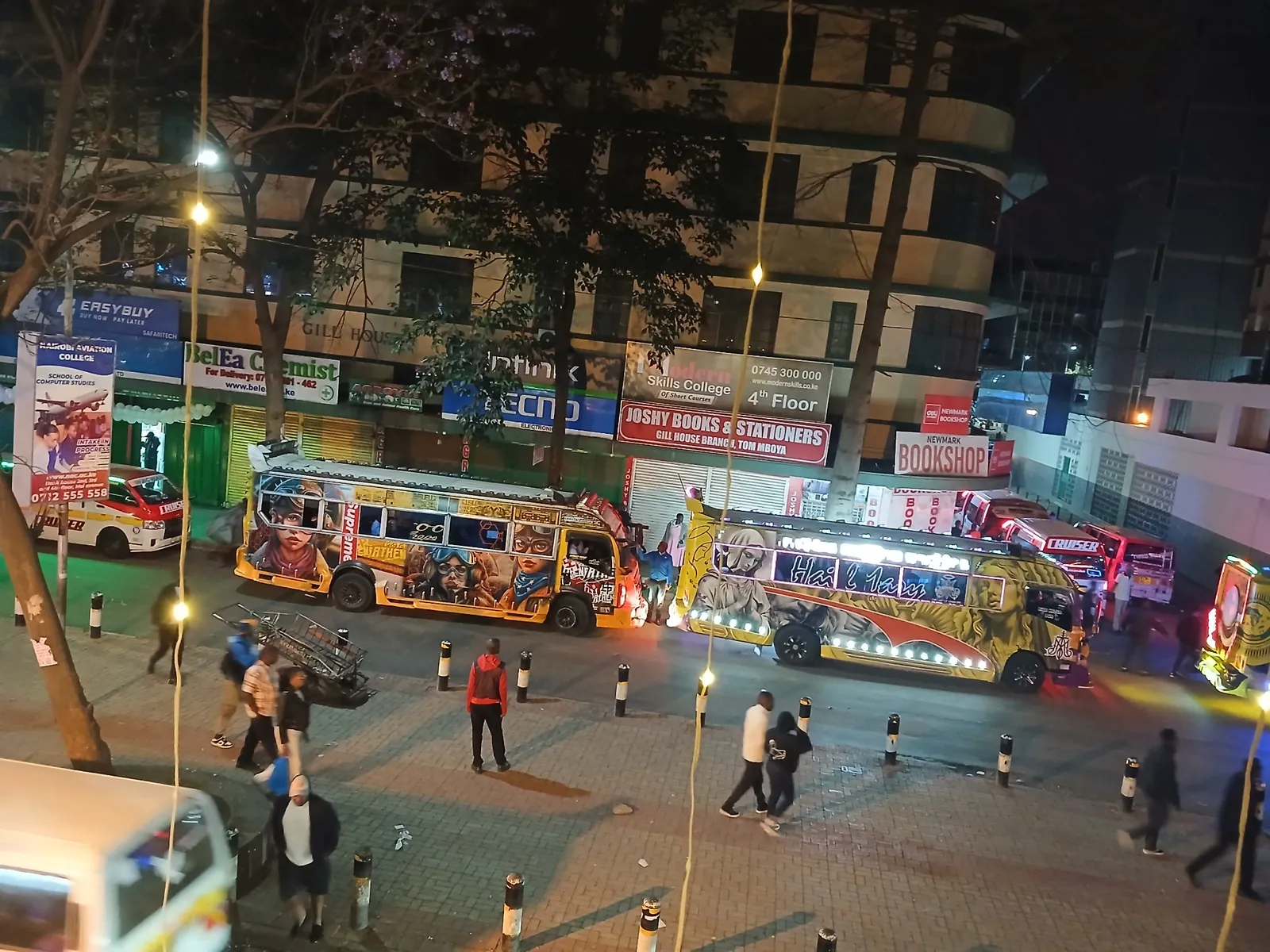
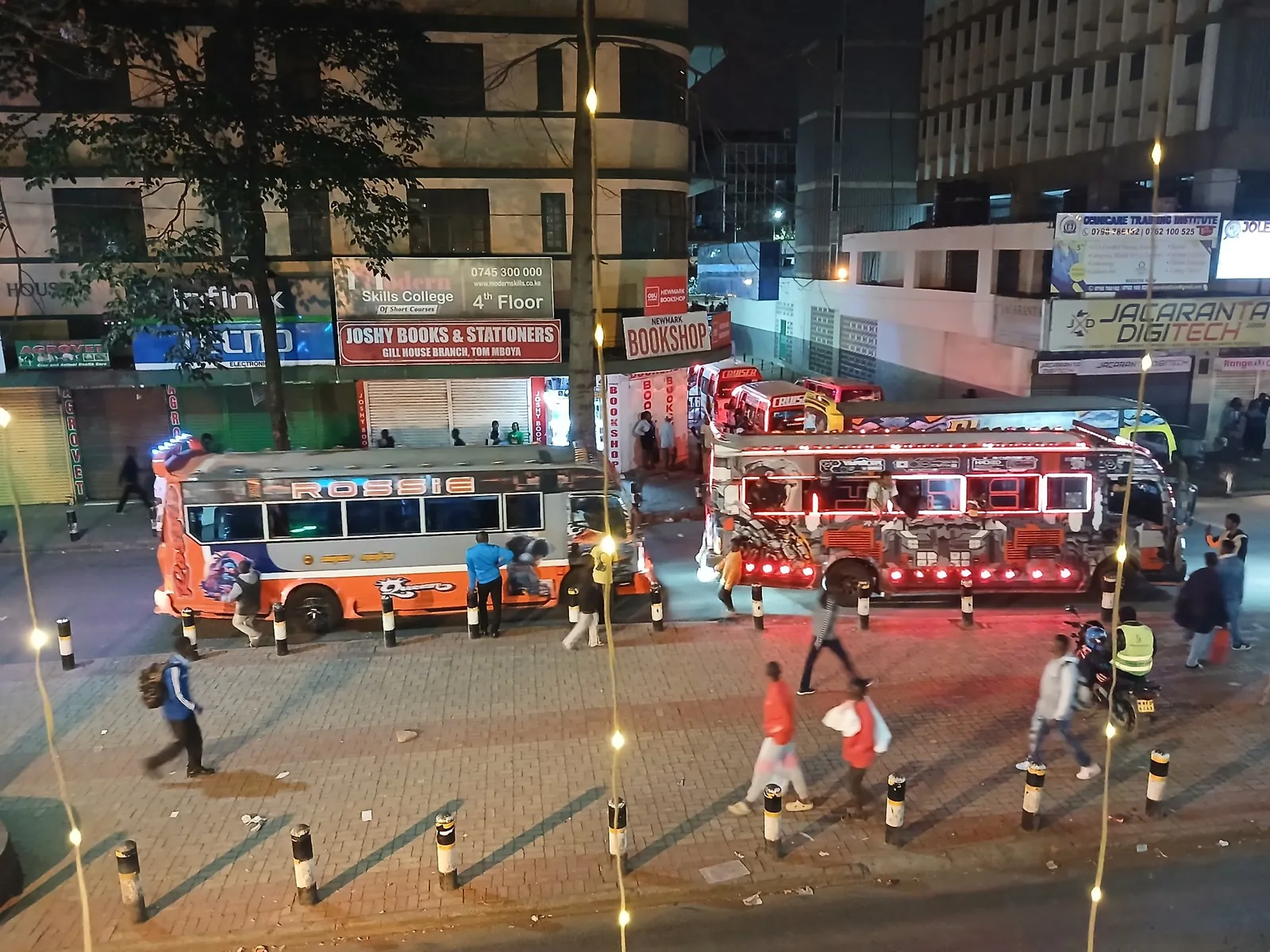
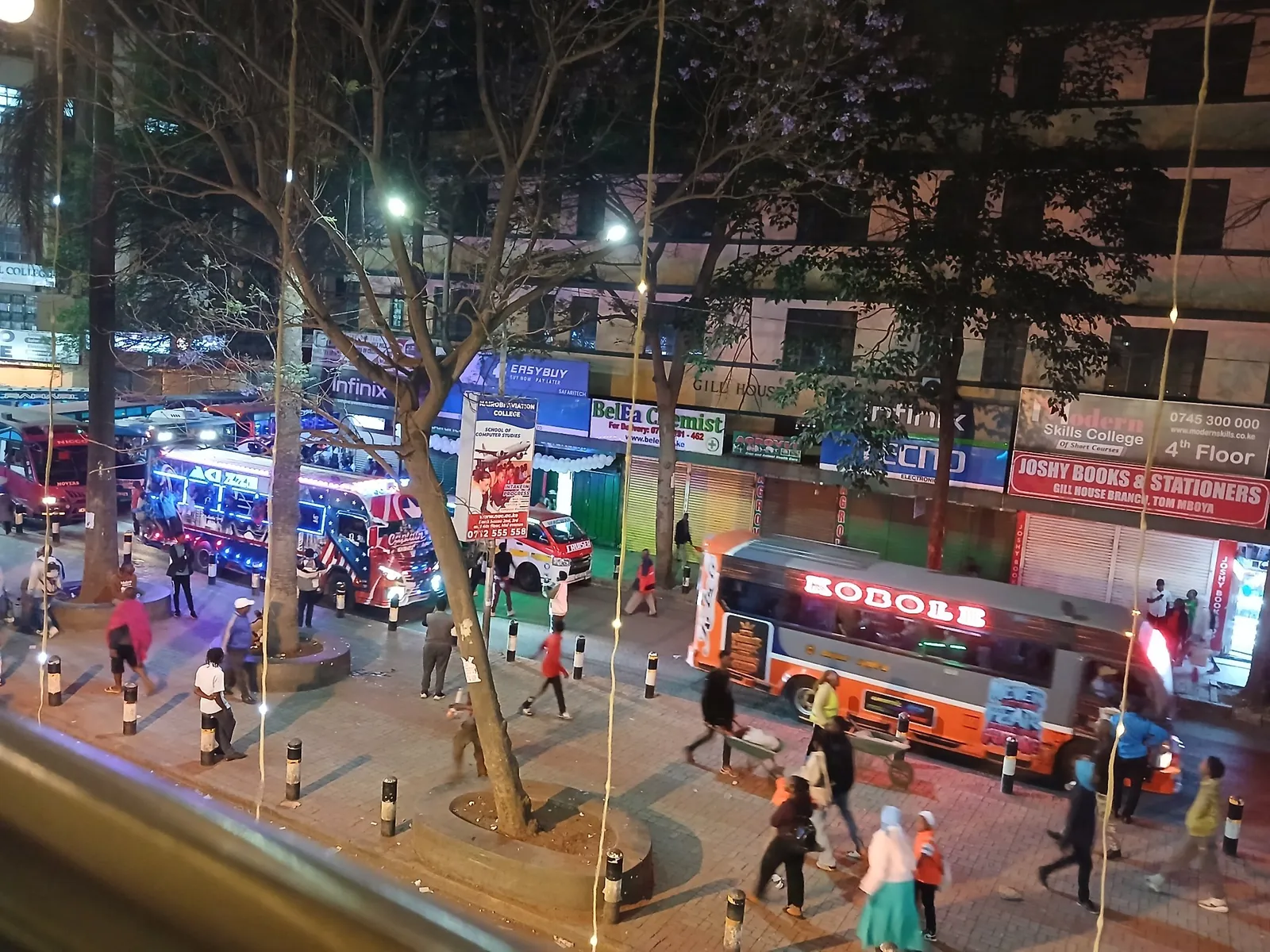
If you have never seen a nganya, the photos explain it better than words. A nganya is a matatu built to be noticed: hand-painted portraits, slogans, rows of LED lights, loud sound systems and screens inside. On one short stretch of Tom Mboya Street in a single evening we saw matatus named Kobole, Rossie, Hail Mary and Blake, each with its own look.
The art is not just decoration. A matatu earns by the trip, and at a crowded evening stage the vehicle that catches the eye fills first. The lights, the names and the music are marketing on wheels, and they are a big part of why Nairobi matatus are famous far beyond Kenya.
Nairobi’s night economy, in plain sight
Behind the lights is a lot of work. Citizen Digital’s June 2026 feature on Nairobi after dark profiled the people who keep the city running at night: security guards on 12-hour shifts, tea vendors who open at sunset, boda riders, night nurses and ambulance drivers (Citizen Digital).
The county wants more of it. In January 2026, Nairobi County’s Geoffrey Mosiria urged bar and club owners to move from residential areas into the CBD, arguing that a livelier centre would mean more jobs, longer-open pharmacies and busier matatus and taxis. “If we move nightlife there, Nairobi will wake up,” he said (K24 Digital).
Look at the photos again and you can see the 24-hour economy already taking shape: chemists, phone shops, bookshops and evening colleges with their lights on, food stalls and kiosks working the crowd, and transport that keeps going long after offices close.
What changes when you trade after dark
Running a shop, bar or college in the evening is not the same as trading by day. Five problems come up again and again:
- The owner is not there. The late shift is run by staff, so the owner needs to see sales, cash and stock from home without calling anyone.
- Cash is a risk. More cash in the drawer after dark is more risk. Every shilling taken by M-PESA is a shilling that is not sitting in the till.
- Fake M-PESA messages. Busy evenings are exactly when a rushed cashier accepts a “nimetuma” SMS without checking.
- Shift handovers. When one cashier hands over to another at 7pm, any shortage has to belong to someone, or it belongs to no one.
- Power and internet cuts. The system has to keep selling when the lights flicker, and catch up when the connection comes back. KRA eTIMS rules still apply to every late sale.
How Jaydee Innovation Hub’s products help night businesses
We build software in Nairobi for Kenyan businesses, and much of it was designed for exactly these problems. Here is how it maps to the businesses on a street like Tom Mboya.
| If you run | What helps | What it does after dark |
|---|---|---|
| A shop, chemist, phone shop or bookshop | RetailPulse POS | M-PESA STK push confirmed by Safaricom and matched to each sale; an eTIMS invoice on every receipt, queued if the internet drops; staff shifts with a cash-up; the owner checks sales and stock from a phone |
| A bar, lounge or restaurant | RetailPulse Bar & Lounge | Tabs by table, spirits sold by the tot, recipes that deduct every ingredient, and Loss Radar flagging unusual voids, refunds and discounts |
| An evening college or training institute | Elimu SMS | M-PESA fee collection matched to each student, attendance with SMS alerts, TVET and college report cards, and accounts in one system |
| A matatu SACCO or delivery business | Custom software and M-PESA Daraja integration | We design and build systems around how your fleet, crews and paybill actually work, scoped and quoted for you |
| An online shop taking orders at night | Lexiscript and the RetailPulse online shop | Lexiscript scans your store for trackers and maps them to privacy laws; RetailPulse takes M-PESA orders and tracks delivery |
Why the owner’s phone matters most
For a business that trades late, the most useful screen is the one on the owner’s phone at home. RetailPulse runs on the shop’s own computer and can be reached over a secure link, so at 10pm you can see the day’s takings, how much came by M-PESA, which M-PESA payments have not matched a sale, and whether any stock is running low for tomorrow. The cashier closes the shift, counts the drawer, and the shortage or surplus is recorded against their name.
Less cash in the drawer
Every M-PESA sale is one less handful of notes in the till after dark. RetailPulse sends the payment request to the customer’s phone for the exact amount and only counts the payment when Safaricom confirms it, so fake messages do not get through. At closing, the cash and M-PESA report compares each tender with what Safaricom actually received. Our M-PESA POS page explains how.
Evening colleges: fees and attendance without the paperwork
Tom Mboya Street and the streets around it are full of colleges running evening and weekend classes. Students pay in instalments, often by M-PESA, and attend after work. Elimu SMS matches each M-PESA payment to the right student, records attendance, and keeps fees, results and accounts together, so the office is not reconciling payments by hand the next morning.
The city that keeps going
Nairobi’s night economy is not a future plan. It is already on Tom Mboya Street every evening, in painted matatus, lit shopfronts and crowds heading home. The businesses that do well in it are the ones that can trust their numbers when the owner is not in the room. That is what we build our systems for.
Nairobi at night: questions business owners ask
Is Tom Mboya Street busy at night?
Yes. Tom Mboya Street is a major matatu corridor in Nairobi's CBD, and the evening rush runs well into the night, with commuters, boda riders, hawkers and shops serving them.
What is a nganya?
Nganya is Nairobi slang for a matatu with custom art, lights and a sound system. Their names and designs help them stand out and fill up quickly at busy stages.
How can a small shop accept M-PESA safely at night?
Use a till that sends an STK push for the exact amount and confirms the payment with Safaricom, instead of relying on a cashier reading an SMS. RetailPulse matches each confirmation to the sale and lists anything unmatched.
Do businesses that trade at night still need KRA eTIMS?
Yes. eTIMS rules apply to every sale whatever the time of day. A POS that sends the eTIMS invoice with each sale, and queues it if the internet drops, keeps late sales compliant.
Can Jaydee Innovation Hub build software for a matatu SACCO?
Yes. We build custom systems and M-PESA Daraja integrations for Kenyan businesses. A SACCO system is scoped and quoted after we understand how your fleet, crews and fares work.
Sources
- Citizen Digital, The city that never sleeps: the unsung heroes powering Nairobi through the night, 10 June 2026
- K24 Digital, Mosiria urges club owners to move to Nairobi CBD for vibrant nightlife, 6 January 2026
- Wikipedia, Tom Mboya Street
All photos were taken by the author on Tom Mboya Street, Nairobi. Shop and matatu names appear as they were seen on the street; no business featured has endorsed Jaydee Innovation Hub.
Does your business trade after dark?
Tell us how your evenings run, and we will show you the RetailPulse or Elimu SMS screens that fit, or scope a custom system for you.
Talk to us →