

A Kenyan school holds more personal data than most businesses: learners’ names, birth certificates, health notes and results, parents’ ID numbers and phone numbers, fee balances and M-PESA payments. The Data Protection Act, 2019 applies to all of it, and most of it concerns children.
The Office of the Data Protection Commissioner (ODPC) has published a Guidance Note for the Education Sector (December 2023). This is what it asks of schools, in plain terms. It is a guide, not legal advice.
First: your school must register with the ODPC
The ODPC note says educational institutions are subject to mandatory registration regardless of their size. Small businesses can be exempt; schools are not. The IAPP also reports the ODPC naming schools among entities that must register regardless of turnover or staff numbers. Registration is done on the ODPC portal.
What the ODPC expects from schools
| Area | What the guidance says | In practice |
|---|---|---|
| Children’s data | Parental or guardian consent before collecting or processing data about minors | A consent section on the admission form |
| Only what you need | Collect only what is necessary for a stated purpose; review it regularly | Don’t ask for data you never use |
| Results | Get informed parental consent before sharing results; only authorised people see them | No public merit lists with full names without consent |
| Photos | Explicit parental consent before publishing or sharing photos of children | Ask before posting on the school page |
| Group chats | Sharing sensitive information in large groups, such as WhatsApp, is a privacy concern | Send fee balances and results one-to-one |
| Security | Access controls, encryption, backups, staff training, audits | Personal logins, not one shared password |
| Retention | Keep data only as long as needed, then delete or anonymise | A written retention schedule |
| Access requests | Respond within seven days | Know who handles requests |
| Breaches | Report to the ODPC without delay, within 72 hours, and tell those affected | A one-page breach plan |
| Software vendors | A written contract: act only on the school’s instructions, security, deletion at the end | A data processing agreement with your vendor |
Summarised from the ODPC Guidance Note for the Education Sector.
Fees, M-PESA and the bursar’s office
Fee records link a child to a parent’s name, phone number and payments. Treat them like any other personal data:
- Send balances privately. A reminder to one parent is fine; a defaulters list posted in a class group is not.
- Limit who sees M-PESA statements. The bursar and the head need them; most staff don’t.
- Don’t reuse data. Phone numbers collected for fee reminders shouldn’t be handed to a bank, a uniform supplier or a political campaign.
- Keep receipts accurate. Parents can ask for their records, and correct ones end disputes quickly.
A ten-point checklist for heads
- Register the school with the ODPC.
- Add a clear privacy notice and consent section to the admission form.
- Get consent before publishing photos or results.
- Give every staff member their own login, with only the access they need.
- Back up records and test that a backup can be restored.
- Lock devices and shred paper records you no longer need.
- Write down how long you keep each kind of record.
- Name a person to handle access requests within seven days.
- Keep a breach plan: who reports to the ODPC within 72 hours.
- Sign a data processing agreement with every software vendor.
How Elimu SMS helps
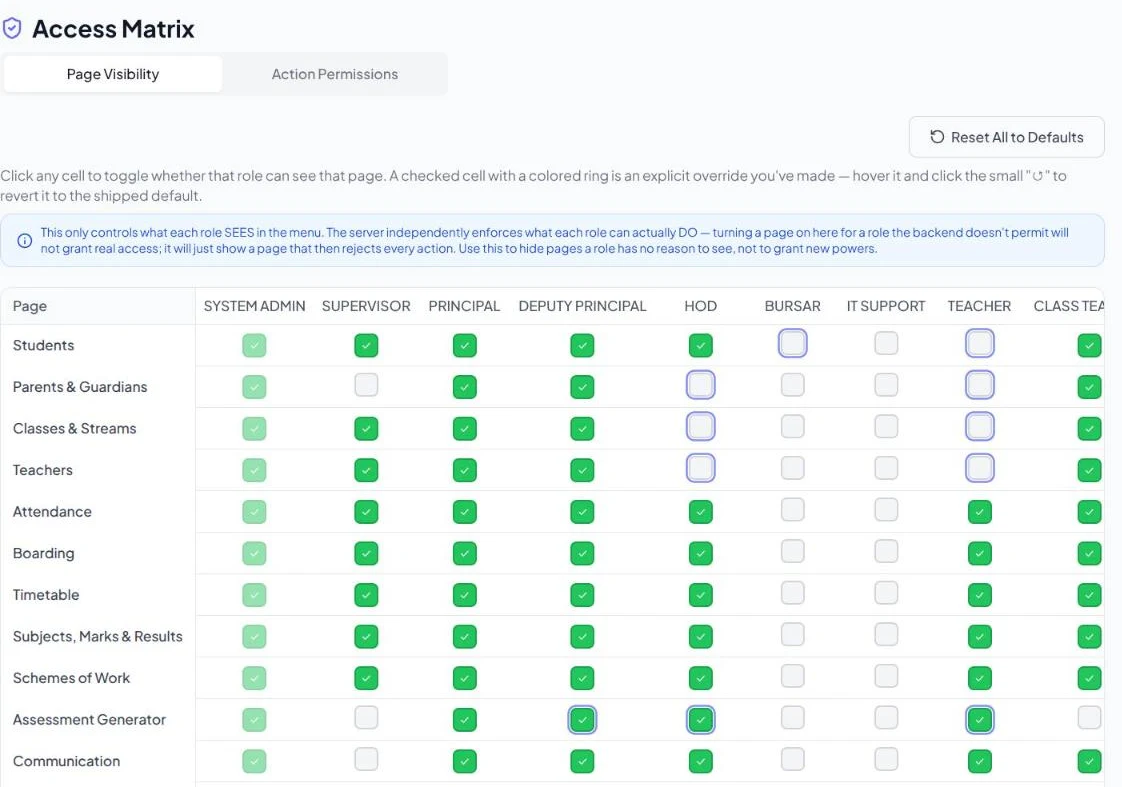
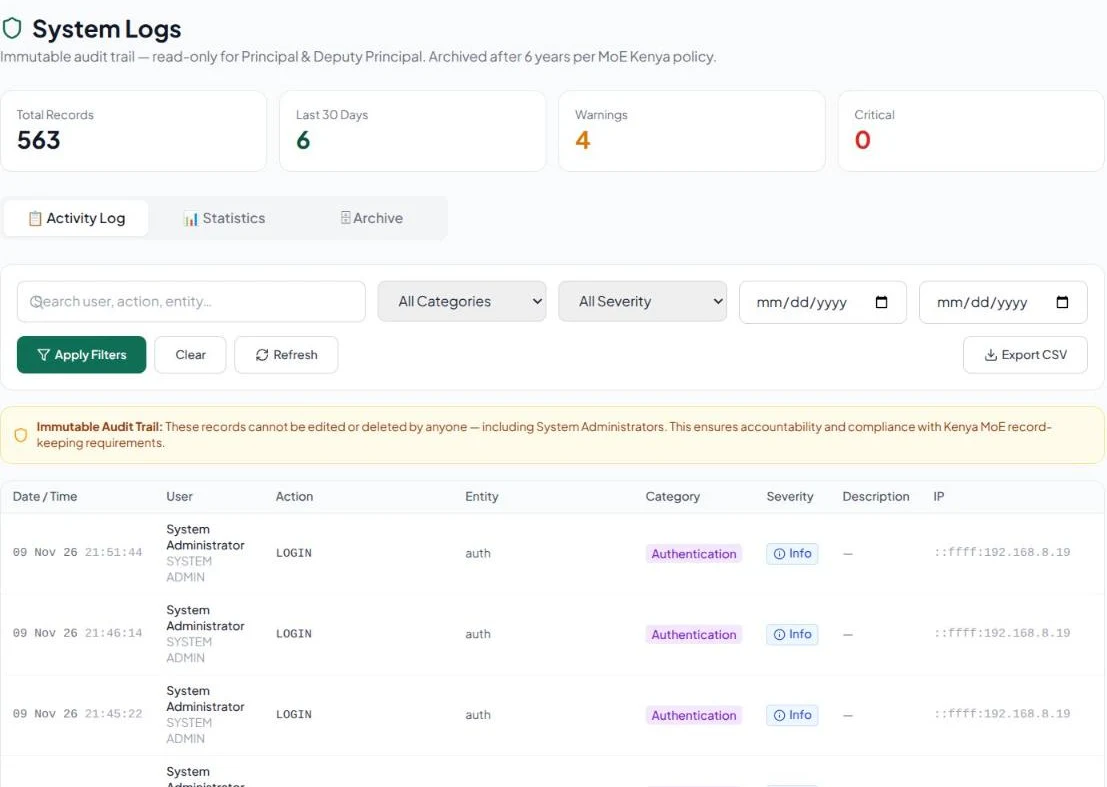
Elimu SMS is installed on the school’s own server, so the school decides where the data lives. Each user has their own role-based login and the head controls which roles can see learner, guardian and fee pages. Fee reminders go to the parent on record, and the system keeps an audit trail that cannot be edited or deleted, plus nightly backups that can be restored. That supports your compliance; it does not replace registering with the ODPC or the policies above.
Talk to us about your school’s data
Book a free demo and we’ll show user roles, private fee reminders and backups, and send you our data processing agreement.
Questions people ask
Do schools in Kenya need to register with the ODPC?
Yes. The ODPC’s Guidance Note for the Education Sector says educational institutions are subject to mandatory registration regardless of their size.
Can a school post learners’ photos on social media?
The ODPC guidance advises getting explicit consent from parents or guardians before publishing or sharing any photographs of children, and not sharing them on personal social media.
Can we share fee balances in a class WhatsApp group?
It is best not to. The ODPC guidance flags sharing sensitive information in large groups, such as WhatsApp, as a privacy concern. Send balances privately to the parent or guardian on record.
How fast must a school report a data breach?
The ODPC guidance says breaches must be reported to the ODPC without delay, within 72 hours, and affected people notified in writing.
Sources
- ODPC, Guidance Note for the Education Sector, December 2023
- IAPP, Kenya ODPC flags business sectors for required registration
- Data Protection Act, 2019 (Kenya)